| Starting Salary | Around $58,300 |
|---|---|
| Median Salary | Around $68,400 |
| Max Salary | $73,700+ |
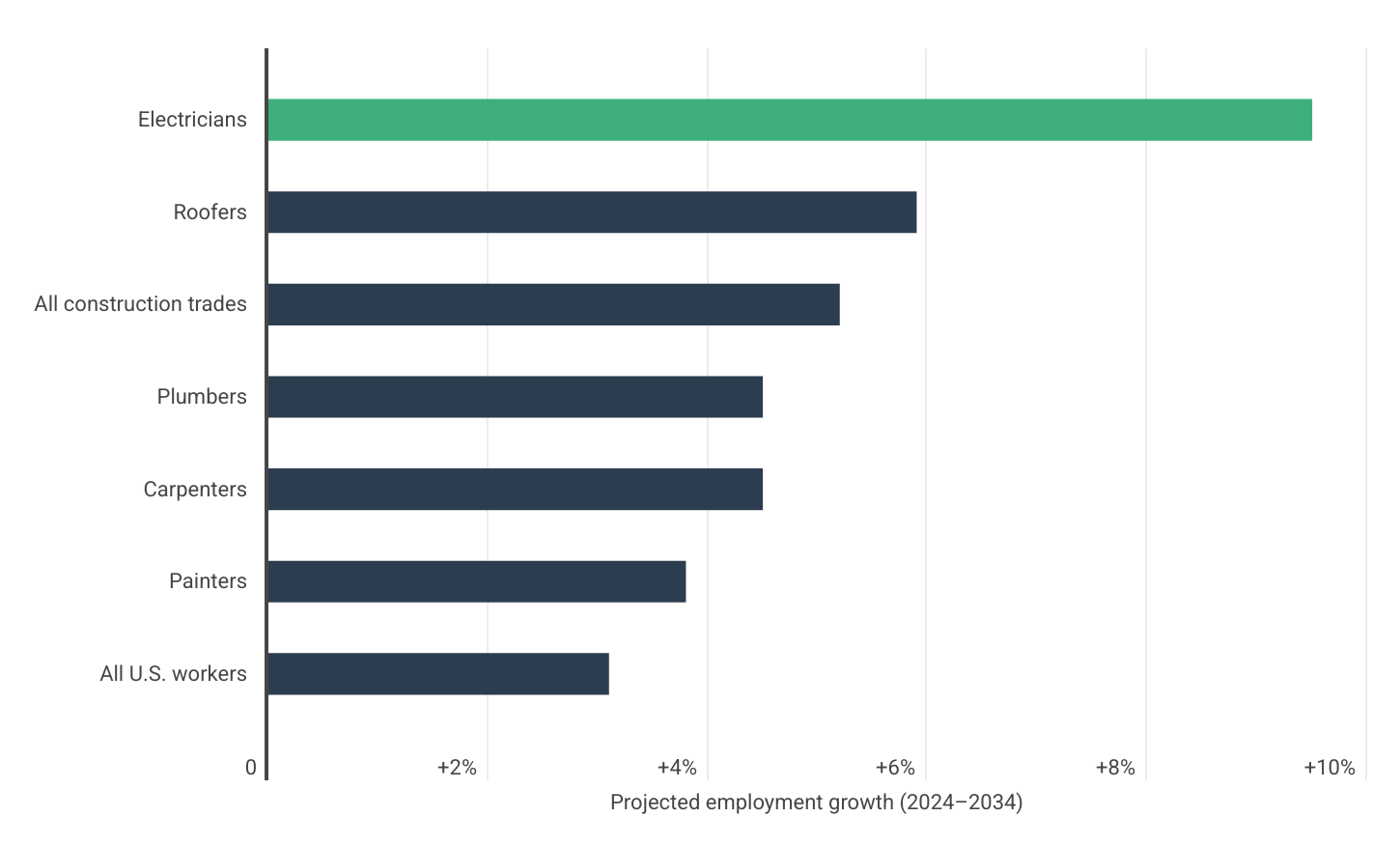
The demand for electricians is surging due to a combination of aging infrastructure, a shift toward renewable energy, and a significant shortage of skilled workers. Many homes and public grids were built decades ago and now require extensive updates to handle the increased power loads from modern technology and electric vehicles. At the same time, the transition to green energy—including the installation of solar panels, wind turbines, and massive AI data centers has created tens of thousands of new specialized roles. Also nearly 30% of electricians are nearing retirement age, and there aren't enough new apprentices entering the field to replace them.
To become an electrician, the first step is usually getting a high school diploma or a GED. While you are in school, it helps to focus on math and science because you will need to do simple calculations on the job. After high school, most people join an apprenticeship, which is a program where you work with a pro and get paid to learn. These programs usually last four to five years and include some classroom time to learn about safety and how electricity works. Some people also go to a trade school first to get a head start. Finally, you will need to pass a test to get a license so you can work on your own.
The primary starting position for an electrician is an Apprentice Electrician, which involves on-the-job training under licensed professionals combined with classroom instruction.
The route to becoming a licensed electrician is a multi-year journey that centers on a blend of formal education and intensive hands-on experience. Most aspiring electricians begin by earning a high school diploma or GED, often focusing on math and physics to build a necessary technical foundation. While some choose to attend a vocational or trade school for 9 to 24 months to gain a head start, the primary requirement is completing a four- to five-year apprenticeship. During this period, you will typically log about 8,000 hours of paid on-the-job training under the supervision of a master electrician, alongside roughly 144 to 200 hours of annual classroom instruction. After finishing your apprenticeship and accumulating the required hours, you must pass a state or local licensing exam then youll officially be a electrician